shaping the future of AI education for young learners
a national children’s museum president’s circle event
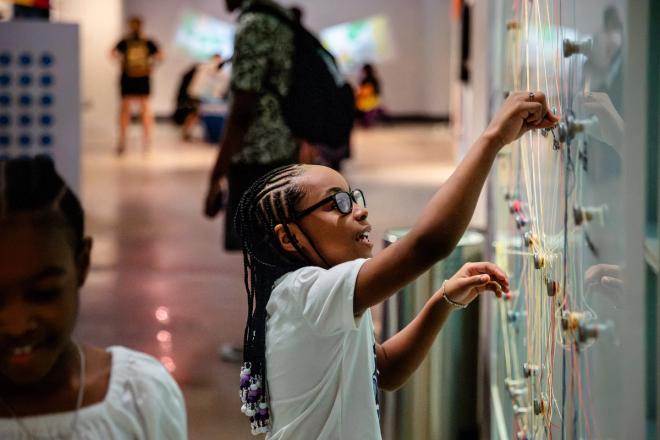
event details
september 30
8 am - 12 pm
national children's museum
washington, dc
this event is invite only
if you are interested in attending this event, please email events@nationalchildrensmuseum.org
about
This high-impact event, hosted in conjunction with the congressional AI caucus, will bring together leaders in technology, education, and policy to explore how AI can be introduced in engaging, age-appropriate ways for young learners.
Artificial intelligence is rapidly reshaping the world our children will inherit. At National Children’s Museum, we believe preparing young learners for this future must begin early—with playful, inclusive, and developmentally appropriate AI education.
With a mission to inspire children to care about and change the world through STEAM learning, and a legacy of a trusted, beloved institution, the Museum is uniquely positioned to lead a national conversation on how to make AI education meaningful and accessible for all children.
This event marks the launch of a national initiative to develop AI literacy exhibits for children’s museums across the country—ensuring every child has the opportunity to understand and engage with the technologies shaping their future.
distinguished speakers
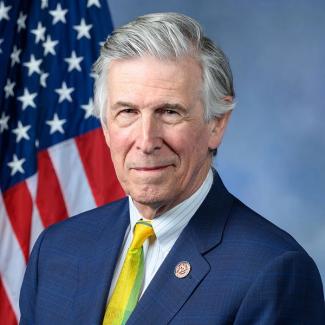
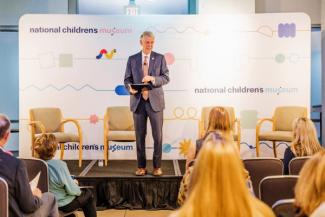
congressman don beyer
Congressman Don Beyer is serving his fifth term as the U.S. Representative from Virginia’s 8th District, representing Arlington, Alexandria, Falls Church, and parts of Fairfax County. He serves on Congress' Joint Economic Committee, and also serves on the House Committee on Ways and Means. He was the Lieutenant Governor of Virginia from 1990 to 1998, and was Ambassador to Switzerland and Liechtenstein under President Obama. He is Vice Chair of the bipartisan Congressional Artificial Intelligence Caucus and a national advocate for responsible AI policy.
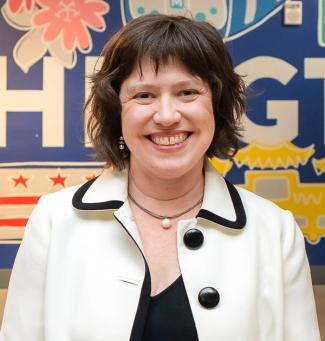
kiryn hoffman
Kiryn Hoffman is President and CEO of National Children’s Museum, a one-of-a-kind hybrid science center and children’s museum dedicated to sparking curiosity through playful, hands-on STEAM experiences for children ages 12 and younger. Located in Washington, DC, it serves more than 225,000 visitors annually from all 50 U.S. states and over 75 countries.
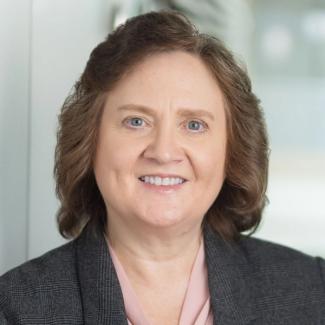
dr. lynne parker
Dr. Lynne Parker is the Former Principal Deputy Director of the White House Office of Science & Technology Policy (OSTP), where she advanced policies across the spectrum of science and technology, with a particular focus on Artificial Intelligence (AI). She has previously served in numerous other White House positions, including Deputy United States Chief Technology Officer, Founding Director of the National AI Initiative Office, and Assistant Director of OSTP for AI. In these capacities, she has led the development of numerous landmark national AI policies bolstering research, governance, education and workforce training, international engagement, and the Federal use of AI.
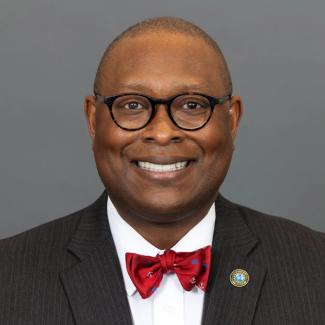
dr. james l. moore III
As a member of the executive leadership team at the U.S. National Science Foundation (NSF), Dr. James L. Moore III is the Assistant Director for the Directorate for STEM Education (EDU), which supports science, technology, engineering, and mathematics (STEM) projects focusing on K-12 education, undergraduate and graduate education, workforce and human resource development, as well as learning in formal and informal settings.

jennie magiera
Jennie Magiera is the Global Head of Education Impact at Google, bestselling author of Courageous Edventures, and the founder of the non-profit Our Voice Alliance whose mission is to elevate marginalized voices and perspectives to improve equity and empathy in education. She also serves on the board of Saga Education. Previously, she was the Chief Innovation Officer for the Des Plaines School District, the Digital Learning Coordinator at AUSL, a Chicago Public Schools teacher and a research assistant in Carol Dweck's Columbia University lab. A White House Champion for Change, ISTE Impact Award Winner, SheRunsIt Working Mothers of the Year, and TEDx Speaker, Jennie works to improve education globally.

erin mote
Erin Mote is the CEO and Founder of InnovateEDU. In this role, Erin leads the organization and its major projects, including its policy and strategy portfolio. She leads the organization’s work on creating uncommon alliances to create systems change - in special education, talent development, artificial intelligence, and data modernization. An enterprise architect, she created, alongside her team, two of InnovateEDU’s signature technology products - Cortex, a next-generation personalized learning platform, and Landing Zone - a cutting-edge infrastructure as a service data product.
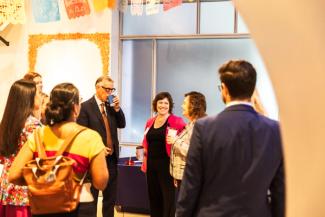
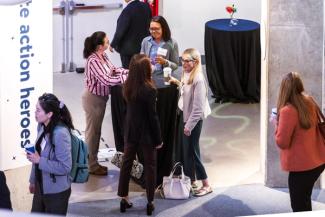
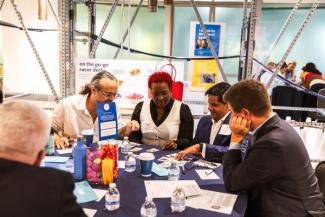
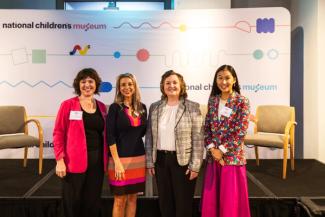
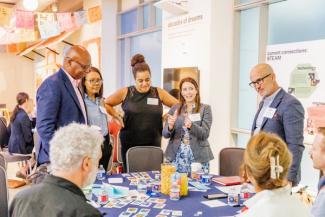
photos from the event
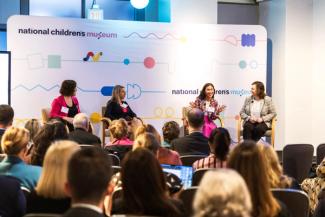
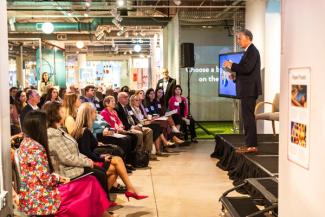
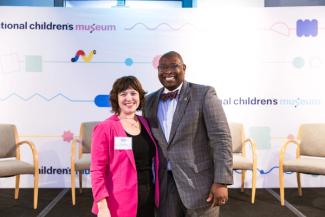

president's circle
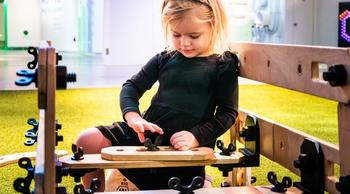
This is the first of many exclusive and engaging events for President's Circle members. These events delve into the intersections of children's education, science, technology, and culture, fostering collaboration and innovative solutions to enhance STEAM learning experiences for children.
The President’s Circle is a group of visionary leaders and dedicated advocates committed to the museum’s mission of inspiring children to care about and change the world. Fostering collaboration and promoting impactful thought leadership, membership in the President’s Circle provides access to exclusive events designed to lead the national conversation around early education through innovation and solution-oriented synergy.
event goals
convene experts
Unite leaders in AI, education, and child development to share best practices.
raise awareness
Emphasize the importance of early AI education in preparing future generations.
foster collaboration
Build partnerships across sectors to support inclusive, scalable solutions.
inform programming
Use insights to shape future STEAM-based AI learning experiences.